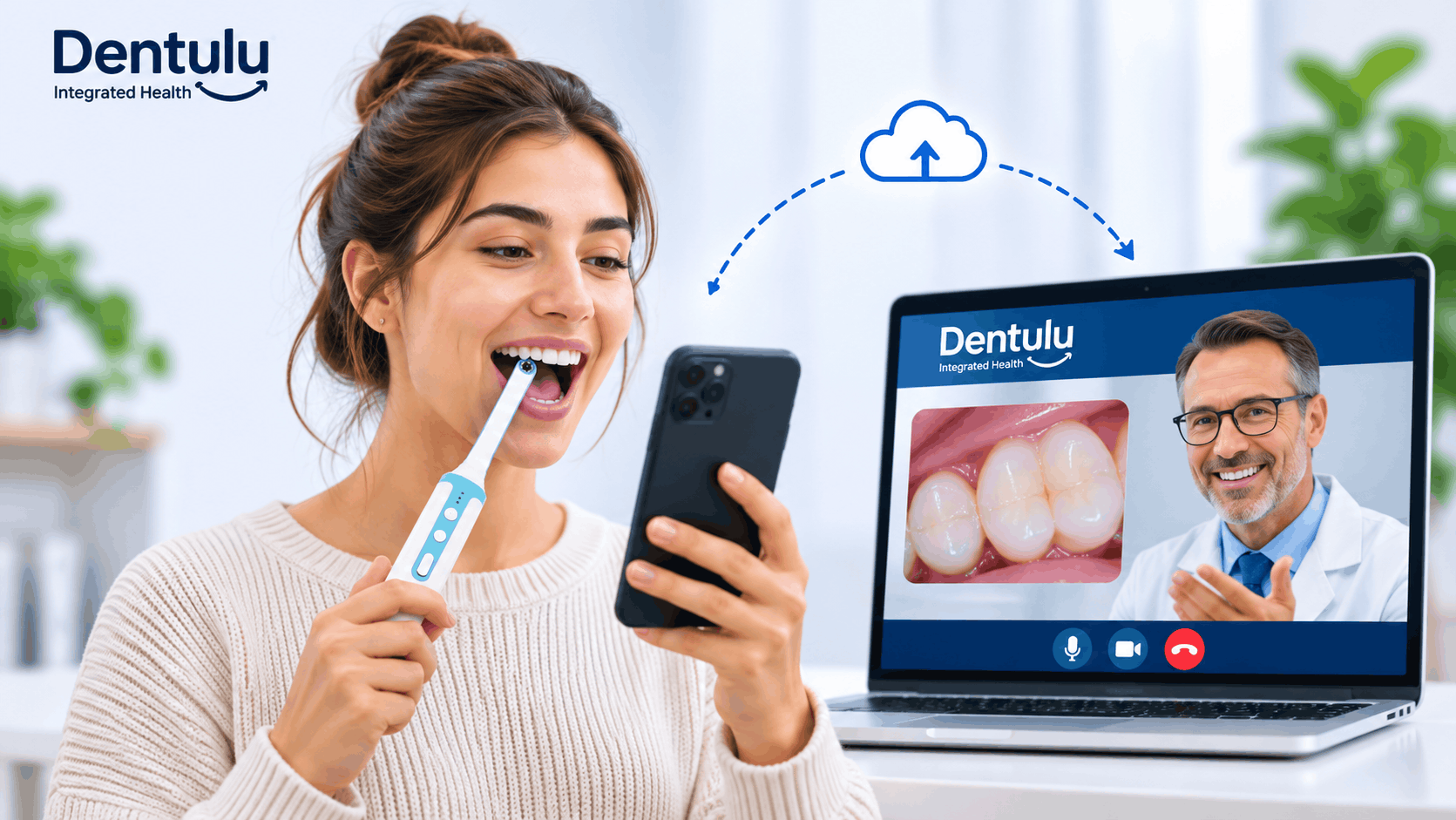
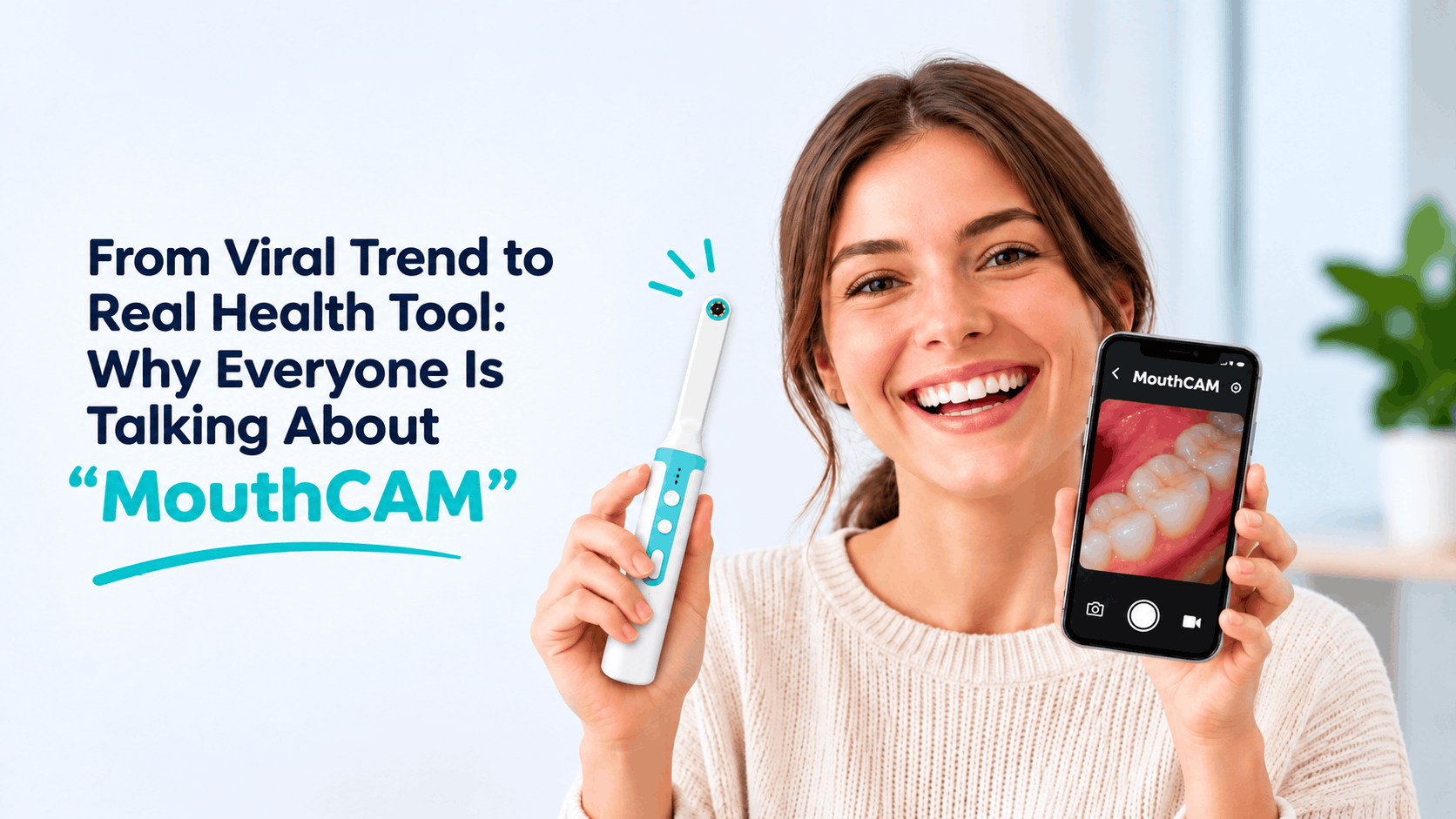
Mouth Cam: From Viral Trend to Real At-Home Dental Tool
If you have scrolled through TikTok, Instagram Reels or YouTube Shorts recently, you have probably seen the mouth cam trend: creators holding a wide-angle action camera in their mouths while they run, dance or skateboard, producing distorted close-ups of their own faces as the world spins behind them.
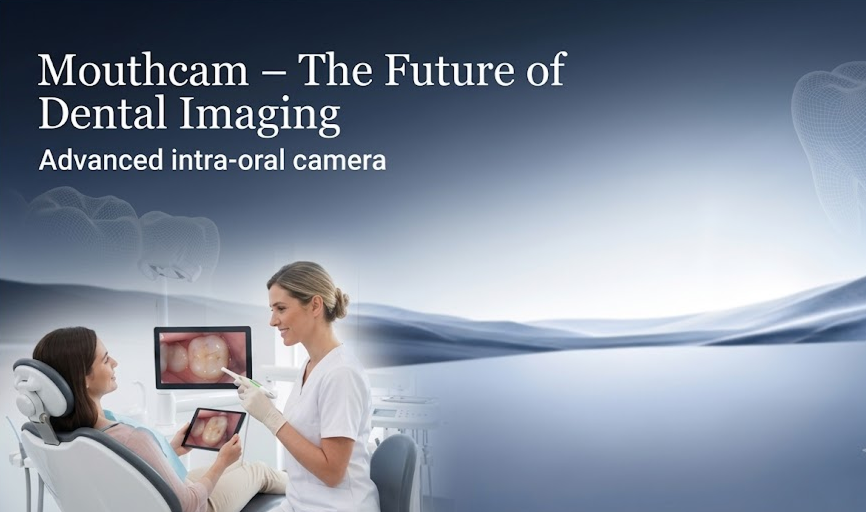
The challenge is pure comedy. But the phrase “mouth cam” has started a more useful conversation. People are discovering how little they know about what is going on inside their own mouths. Real intraoral cameras such as MouthCAM, the at-home dental camera from Dentulu, are changing how families, caregivers and dental professionals look after oral health between visits. Here is why seeing inside your mouth is more than a passing trend.
Why seeing inside your mouth changes everything
For most of us, the inside of the mouth is a mystery until we sit in the dentist’s chair. Even when a dentist points at a shadow on an X-ray or mentions early gum inflammation, it is hard to picture what they mean. So most people book an appointment only when something hurts, and by then a small fix has sometimes grown into a root canal, a crown or an emergency visit. That progression is well documented: the NHS on tooth decay notes that decay may cause no symptoms at first and can reach the pulp of the tooth, where root canal treatment or extraction may be needed. Gum disease follows the same quiet pattern, which is why the ADA notes that it is usually painless and that many people do not know they have it.
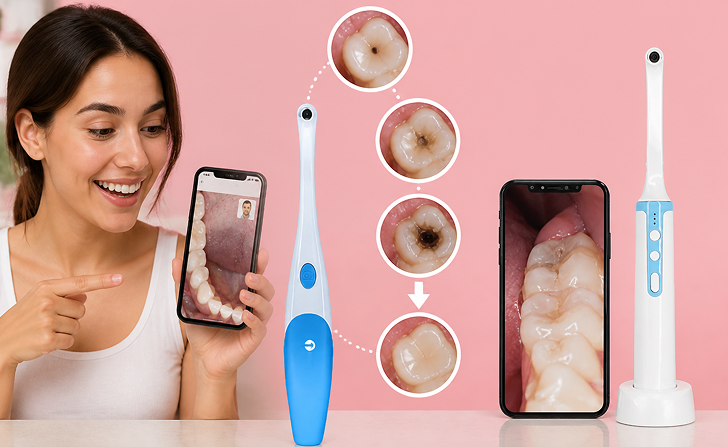
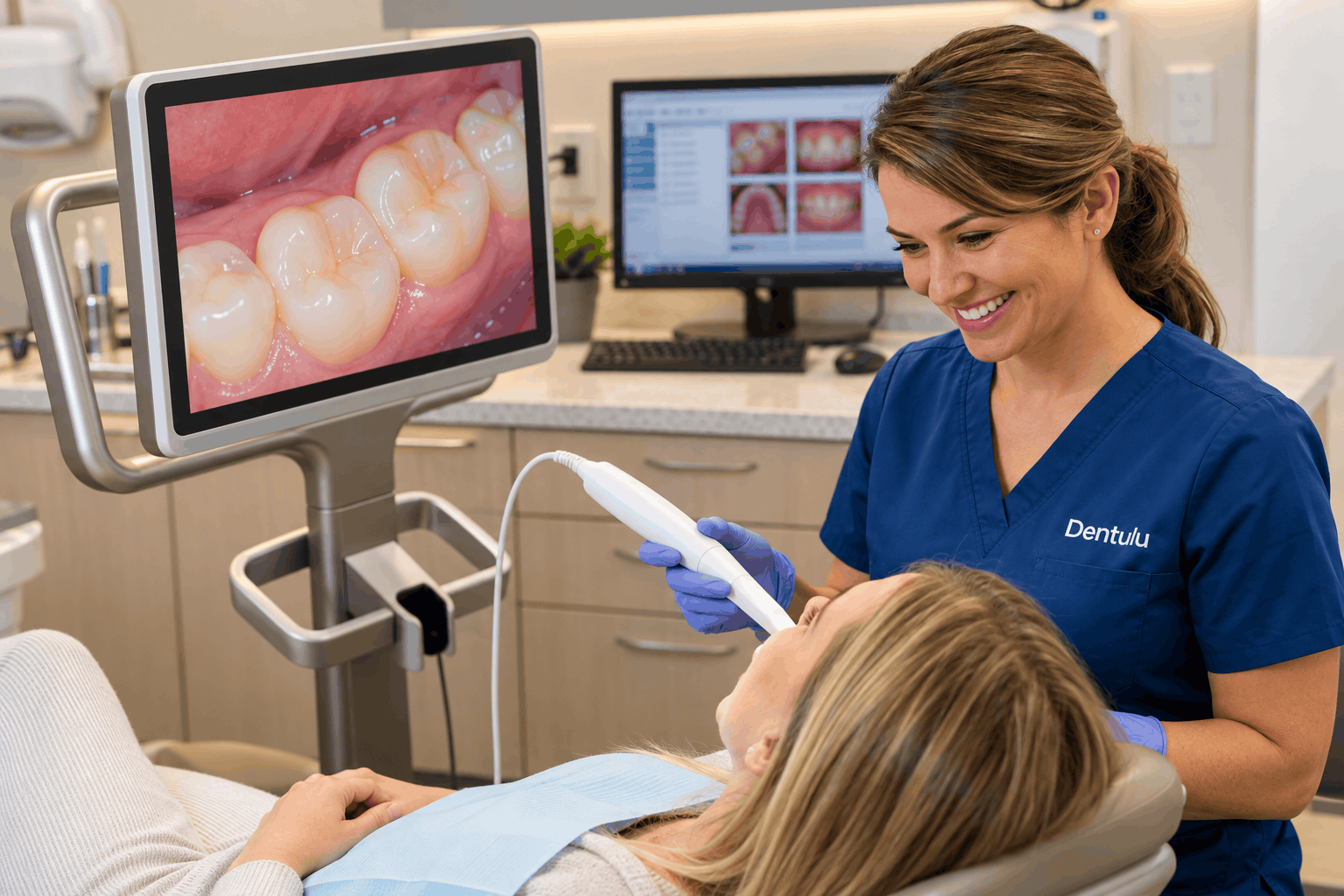
An intraoral camera reverses that routine. Instead of waiting for pain, you can capture clear, high-definition photos and short videos of your teeth and gums at home. When you can see plaque collecting along the gumline or a small chip on a back molar, looking after your teeth stops feeling like a chore and starts feeling like self-care.
Five ways families use MouthCAM at home
You do not need a dental degree to notice changes. A weekly look with a wireless or wired intraoral camera shows areas a bathroom mirror cannot reach. Here are five situations where that matters:
-
Spotting early signs of decay and cracks. Close-up images make it easier to notice stained grooves, chipped edges, cracked teeth or a filling that has lost its margin, so a dentist can look before it becomes an emergency.
-
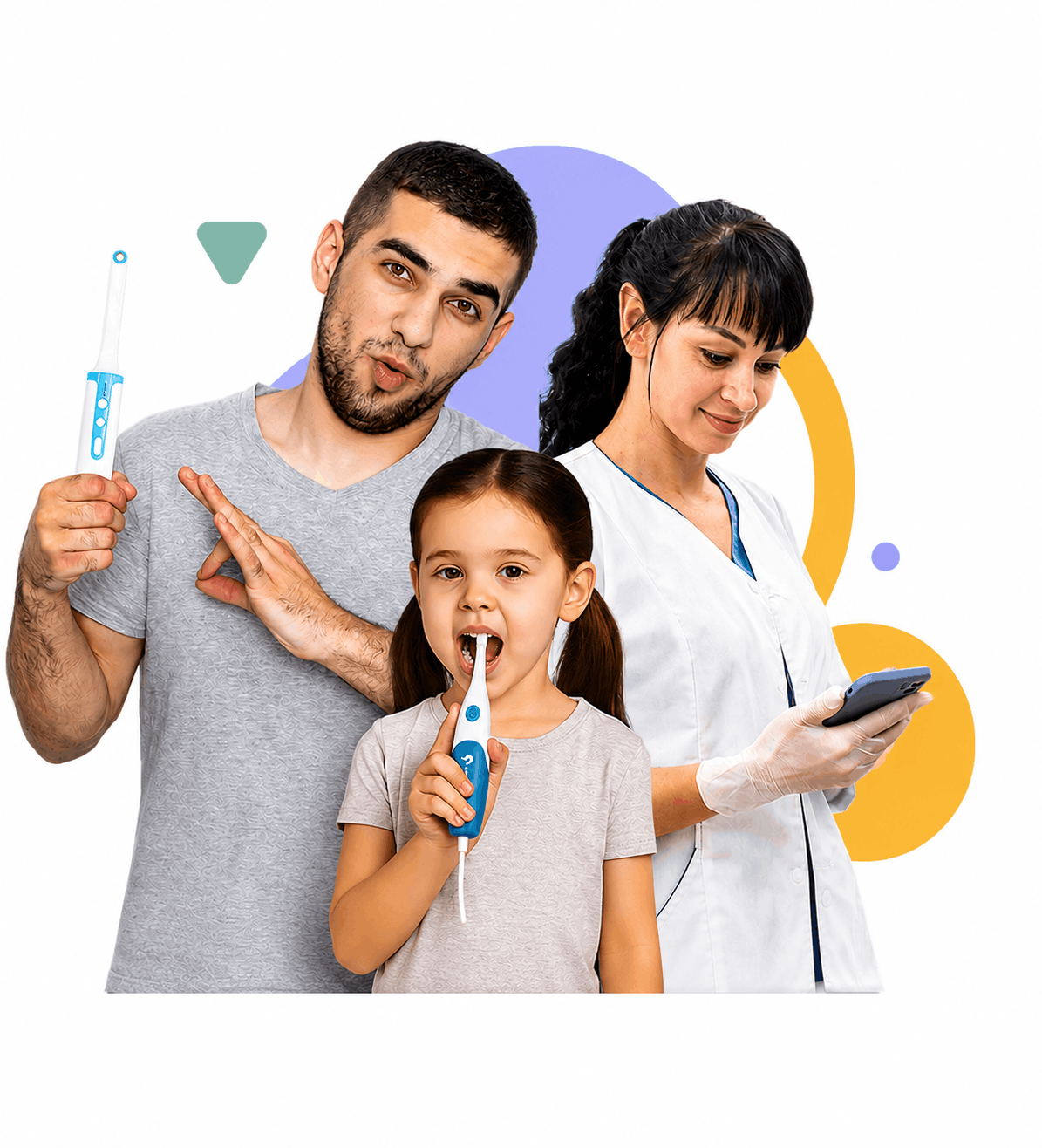
Checking children’s teeth without the tears. Getting a young child to sit still for a mouth check is never easy. Parents turn it into a game on the phone screen while keeping an eye on baby teeth, erupting permanent teeth and early decay.
-
Monitoring braces and clear aligners. Weekly photos track tooth movement, show food trapped around brackets, and give the orthodontist a progress update between appointments.
-
Keeping an eye on dental work. Crowns, implants and veneers are significant investments. Regular snapshots help you watch healing around an implant or notice when an older crown starts to fail.
-
Supporting elderly or homebound relatives. For a senior or a family member with limited mobility, a trip to the clinic for a quick look is exhausting. Caregivers capture clear images at home and send them to a dentist through a consultation, so the dentist can advise on whether an in-person visit is needed.
More scenarios are on the MouthCAM use cases page.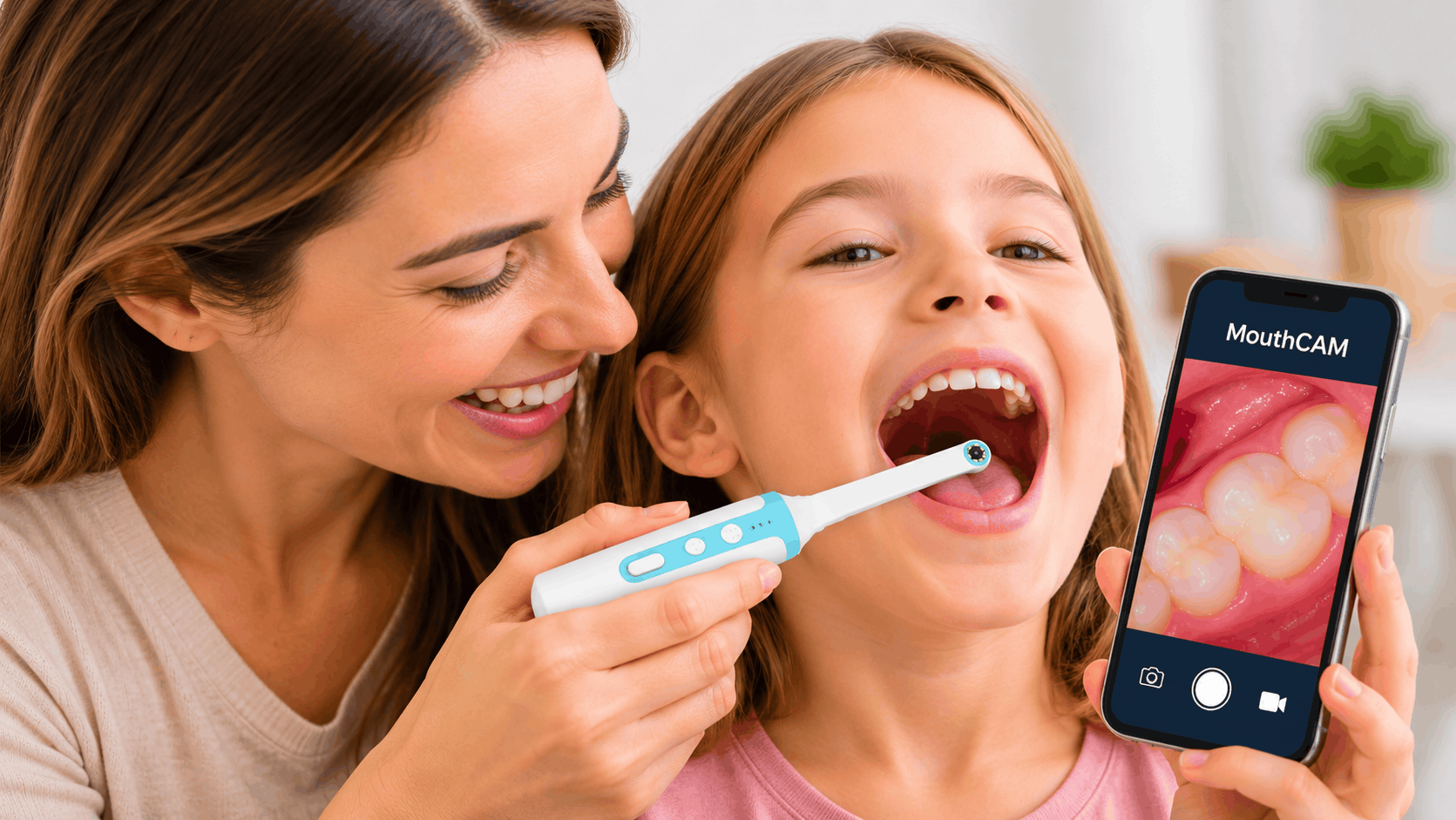
How MouthCAM connects you to a dentist remotely
The biggest benefit of an at-home dental camera is how naturally it pairs with teledentistry.
Suppose you notice a sore on your gum, a bleeding spot that will not settle, or a chipped filling on a Friday evening. Instead of spending the weekend worrying or searching symptoms online, you take a few photos or a short video with MouthCAM, then share them through the Dentulu Patient App for a photo consultation or a video consultation with a licensed dentist, with 24/7 emergency cover.
Your dental team gets a clear, well-lit view of the exact area without you taking time off work or sitting in a waiting room. If it is minor, they can reassure you. If you need in-office care, they already know what to expect before you arrive. Images and videos are shared only with the dental professional you choose.
One honest note: an intraoral camera is a tool for tracking and remote check-ins, not a replacement for professional cleanings and in-person exams. It does not diagnose. A dentist does that, from what the images show.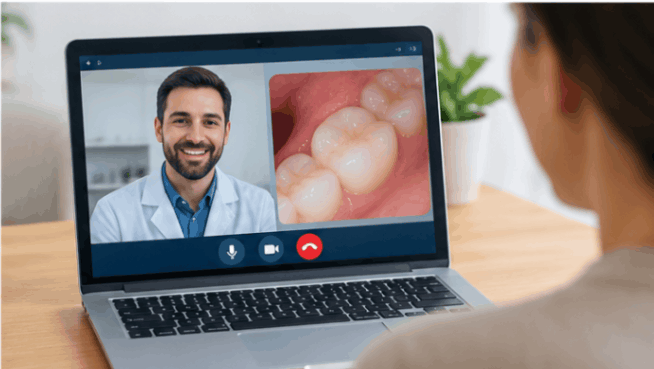
Choosing the right MouthCAM for your routine
Whether you are a health-conscious parent, someone who finds dental visits stressful, or a dental professional who wants patients to see what you see, the right model depends on how you will use it.
-
MouthCAM Wireless Intraoral Camera. Built for home users and families. Rechargeable, lightweight, 1080p HD with built-in LED lighting and Wi-Fi, it connects to a compatible smartphone so you can scan your whole mouth, save images to your phone or the Dentulu app, and swap the replaceable heads between family members. Works with iPhone on iOS 15 or later and Android phones and tablets on Android 9 or later; it is not compatible with iPads, Macs or Windows computers.MouthCAM Wireless Intraoral Camera
-
MouthCAM Wired Intraoral Camera. Plug-and-play over USB for computers, tablets and Android devices, with Full HD imaging and eight LEDs for even lighting. No charging to think about. Note that it is not compatible with iPhones.MouthCAM Wired Intraoral Camera
-
MouthCAM Pro. The professional model for practices, for chairside imaging, patient engagement and remote patient monitoring.
For practice enquiries, see MouthCAM for dental professionals. All models are available from the official MouthCAM shop, and setup and cleaning steps are in the user manual.