Intraoral Cameras Explained: How They Work, Why Dentists Rely on Them, and Why You Can Now Own One
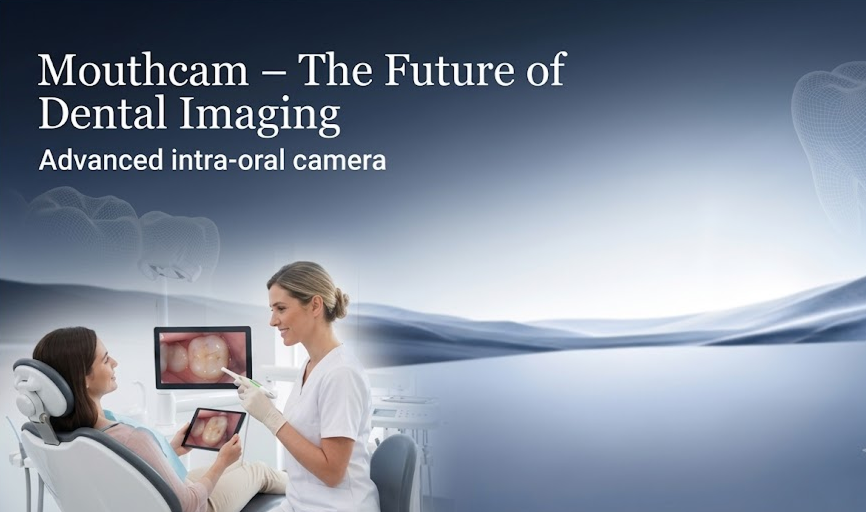
An intraoral camera is a pen-sized digital camera with its own light source, built to photograph the inside of a mouth. For twenty years it has been a chairside tool for dentists and hygienists; recently it has become something a patient can keep in a bathroom drawer. This post explains how it works, why professionals rely on it, what to look for and what changes when the camera is in the patient’s hand.
How an intraoral camera works
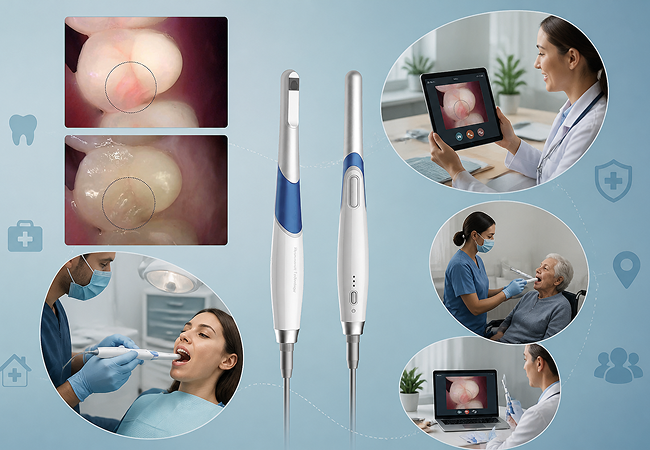
The principle is simple. A small image sensor sits behind a lens at the tip of a slim wand. Because the inside of a mouth is dark, a ring of LEDs typically six to eight surrounds the lens to light the tooth surface evenly. The image travels to a screen: over a USB cable to a computer in a clinic, or over Wi-Fi to a phone or tablet in a wireless model.
Two design details matter more than the spec sheet suggests. Field of view: a wide-angle lens (around 90°) captures a whole quadrant in one frame. Focus: autofocus is forgiving for new users; fixed-focus needs a consistent distance but is cheaper and more robust.
Resolution is the number most people look at first. For showing a patient what is going on, 720p is enough. For documentation, before-and-after records and remote review by a dentist, 1080p (about 2 megapixels) is the practical standard.
Why dentists use them: seeing is believing
Ask a hygienist why they reach for the camera and the answer is rarely “diagnosis”. It is persuasion, in the honest sense. Patients underestimate what is happening in their own mouths. Bleeding gums, a hairline fracture, a chalky white patch of early demineralisation: described in words, these are easy to dismiss. Shown on a screen at ten times life size, they are not.
Clinicians who use cameras routinely report the same pattern: patients who see the problem become invested in it, ask about it at the next visit, accept the recommended treatment and follow the home-care advice. The image also becomes a dated baseline for comparison, referral or an insurance claim.
Typical things a clinician will photograph:
- plaque and inflammation, especially after disclosing solution
- fracture lines, wear facets and chipped edges
- early decay and failing margins on crowns and fillings
- suspicious areas found during an oral-cancer screening
- before-and-after shots of any procedure
The wider move to digital dentistry reinforces this. An American Dental Association panel survey published in 2021 found that just over half of responding dentists had adopted intraoral scanners, with most citing clinical efficiency as the reason and the main barrier among non-adopters being cost. Cameras are the lower-cost, lower-friction end of that same shift towards seeing and recording rather than describing.
A market that keeps growing
Analysts expect the global intraoral camera market to grow by roughly US$555 million between 2023 and 2028, about 5.7% a year, driven by rising rates of decay and gum disease and by integration with practice-management software. Two trends stand out: wireless models are gaining on wired ones, and the high cost of clinical units thousands of dollars each is what holds smaller practices back.
That cost gap is exactly where consumer intraoral cameras have appeared.
What changes when the patient holds the camera
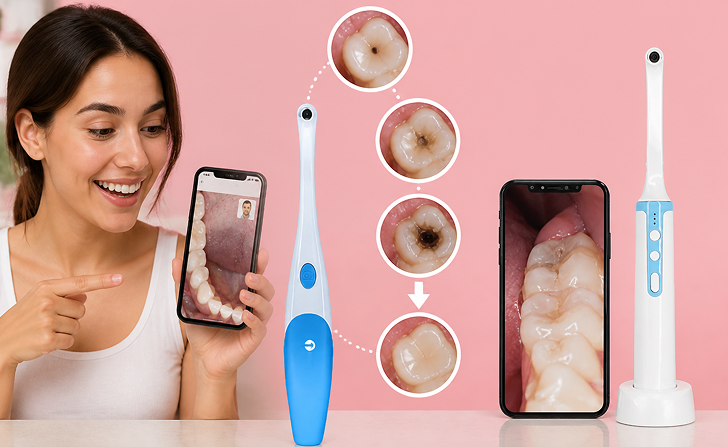
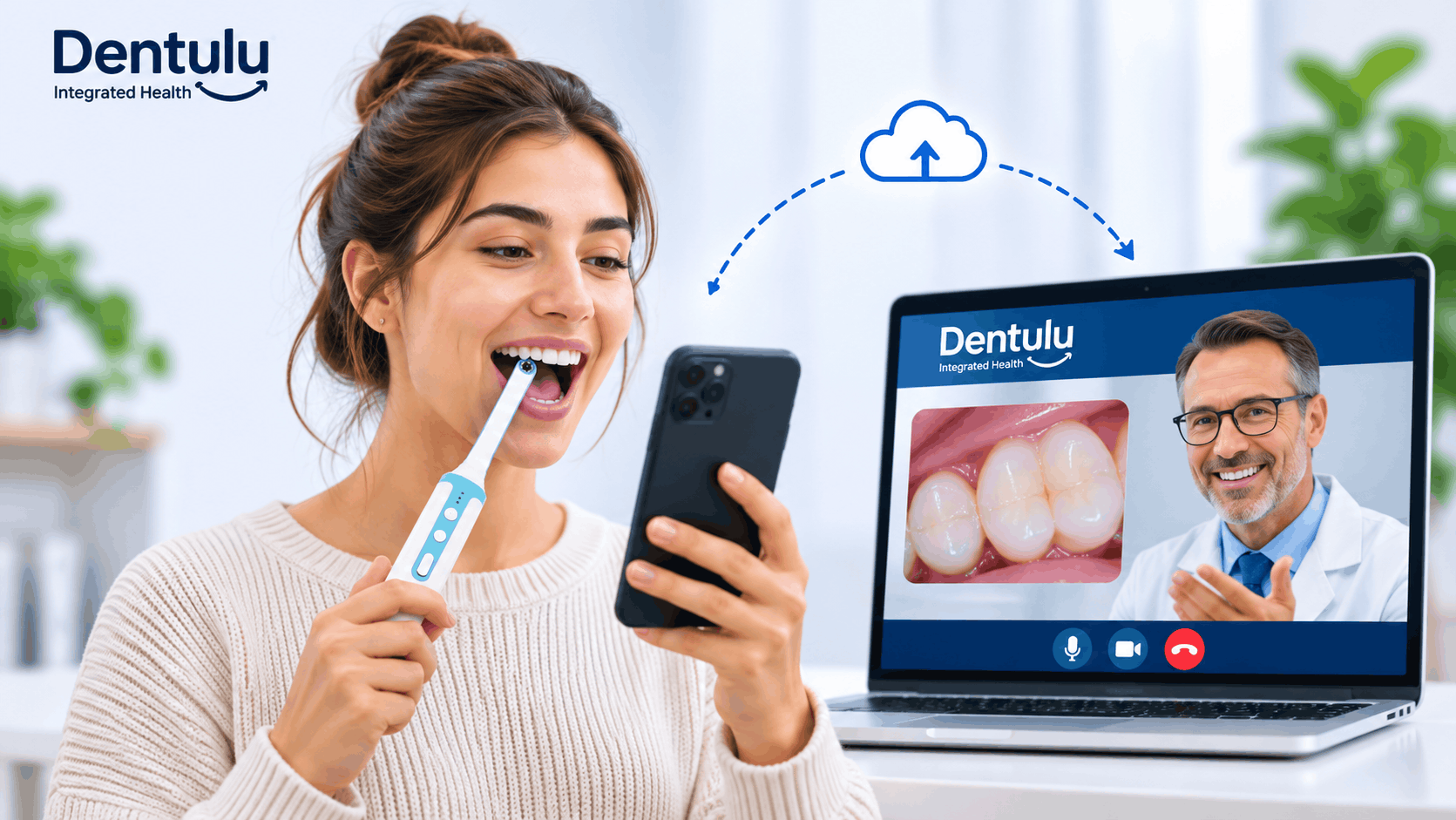
Until recently, the only way to get a dentist’s eyes on your mouth was to be in the chair. A home intraoral camera breaks that link. You capture a few clear photos or a short video, and a dentist reviews them remotely the same day, in many teledentistry services and tells you whether something needs a visit, can wait, or can be managed at home.
That matters most for people for whom the chair is hard to reach: parents checking a child’s teeth, families caring for an older relative, people working offshore or rurally, orthodontic patients between reviews, and anyone with a sudden toothache who would rather know than guess.
Two honest limits. An intraoral camera is not an X-ray it cannot see between teeth, under the gum line or beneath an existing filling. And it does not diagnose anything; a dentist does that. What it does is make the decision to book an appointment an informed one.
What to look for in a home intraoral camera
- 1080p / 2-megapixel sensor – enough detail for a dentist to review remotely.
- Six to eight adjustable LEDs – even lighting without hot spots.
- Wide-angle lens – a full quadrant per frame means fewer photos and less fiddling.
- Wired or wireless – wired USB is plug-and-play and never needs charging; wireless gives freedom to use a phone.
- An app that stores and dates images – the value is in the timeline, not the single photo.
- Hygienic tip covers and easy cleaning – the same infection-control logic that applies in a clinic.
- A path to a dentist – the camera is only half the product; the review is the other half.
Where MouthCAM fits
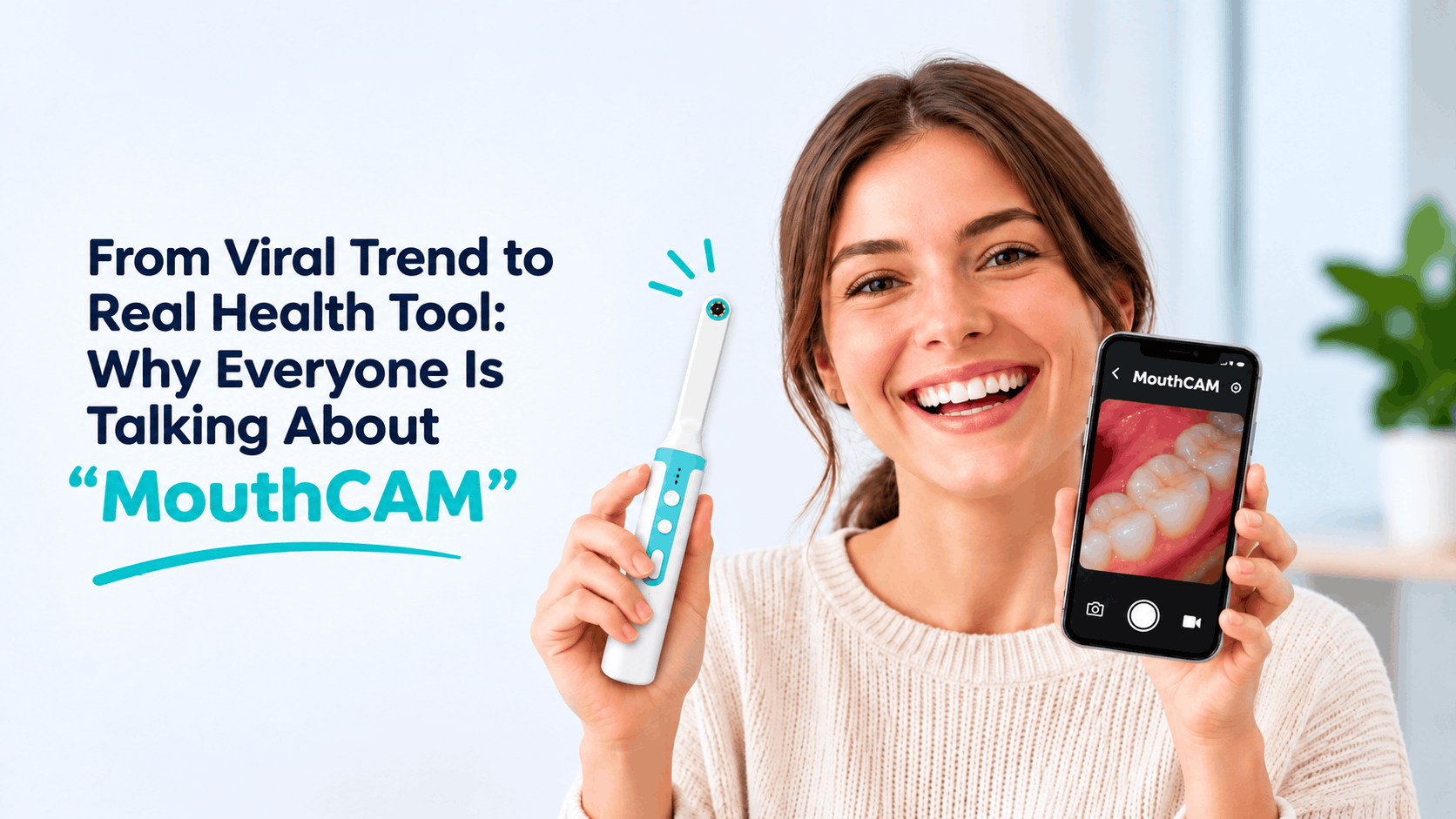
MouthCAM was designed around that last point. It is a 2-megapixel, 1080p intraoral camera with eight adjustable LEDs and a 90° wide-angle lens, available in a plug-and-play wired USB version that works with computers, tablets and Android devices, and a wireless version for phones. The MouthCAM app stores, organises and dates every image, and connects directly to Dentulu’s teledentistry service, so a photo taken on the sofa can be in front of a licensed dentist within hours. Wired models start from $99 a fraction of a clinical unit and professional pricing is available for practices that want to put cameras in patients’ homes as part of a remote-monitoring programme.
The intraoral camera started life as a tool to help dentists show patients what they could not otherwise see. Putting one in the patient’s own hands is simply the next step in the same idea.
Frequently asked questions
Is an intraoral camera safe to use at home? Yes. It only takes pictures. Use the hygienic tip covers, clean the camera after each use, and never share it between people without cleaning.
Can it replace a dental check-up? No. It supplements check-ups by letting a dentist see your mouth between visits. X-rays and in-person examinations are still needed.
What is the difference between an intraoral camera and an intraoral scanner? A camera takes photographs and video. A scanner builds a 3-D digital model of the teeth, mainly for crowns, aligners and other restorations, and costs many times more.
Which should I choose, wired or wireless? Wired if you will use it with a computer or tablet and want zero setup; wireless if you want to use your phone anywhere in the house.