Seeing Is Understanding: How Intraoral Cameras Are Changing the Dental Visit
For a long time, a dental exam meant sitting back, opening the mouth wide, and trusting the person with the mirror to tell you what they see. That trust is still the foundation of good dental care, but the tools available to build it have upgraded a lot. Among the most useful additions to the modern dental chair is a device small enough to fit in your mouth and powerful enough to show you, in real time, exactly what your dentist is looking at: the intraoral camera.
What an Intraoral Camera Actually Does
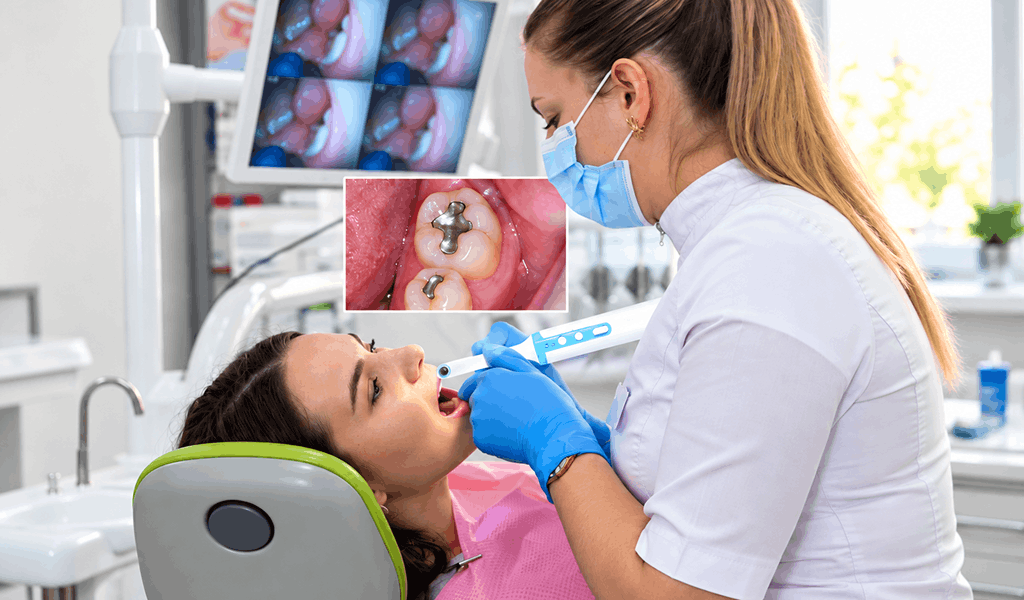
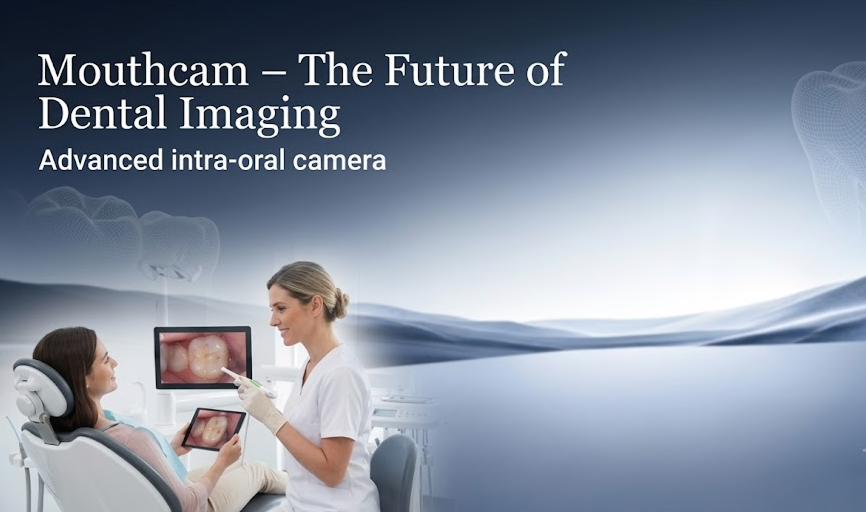
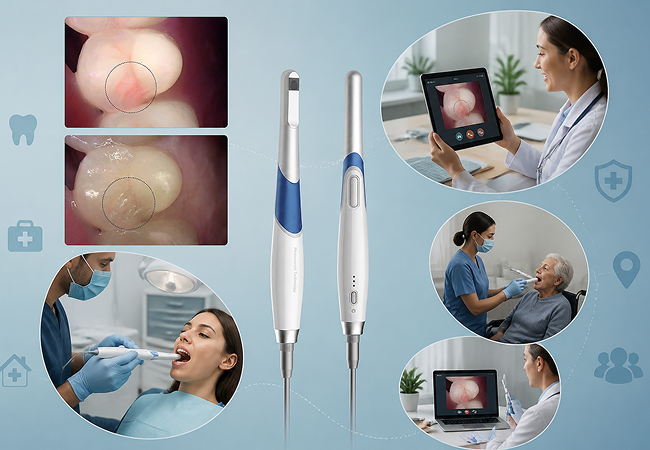
Strip away the branding and an intraoral camera is a slim wand with a light and a lens on the end, connected to a screen. A dental professional guides it gently around the inside of the mouth, and the images stream live to a monitor that both the provider and the patient can see. Some models capture still photos for a chart; others record short video clips so a specific area can be reviewed later. Either way, the basic idea is simple: instead of relying only on a verbal description of what’s happening in your mouth, you get to look at it yourself.
This matters more than it might seem at first. Dentistry has always had a bit of an information gap between provider and patient. The dentist has years of training and a direct line of sight, while the patient is often lying back, unable to see anything at all. An intraoral camera doesn’t close that gap in expertise, but it does close the gap in shared information. When a dentist points to a spot on a screen and says “here’s what I’m referring to,” the conversation shifts from abstract to concrete.
| Learn More on Intra Oral Camera@ https://mouthcam.com/ |
Where It Fits Into a Typical Visit
In most practices, the camera comes out early in an appointment, often as part of a routine checkup or a new patient exam. The dentist or hygienist moves the wand around each quadrant of the mouth, capturing images of teeth, gumline, and any areas of concern. Those images can then be pulled up side by side with prior visits, giving a visual timeline of how a particular tooth or area of the gums has changed.
It’s also common for the camera to be used in a more targeted way. For example, when a patient reports sensitivity in a specific tooth, or when a dentist wants a closer look at the margin of an old filling. Rather than describing what’s found, the provider can show it, and the patient can ask questions about what they’re seeing at the moment.
A Tool That’s Expanding Beyond the Traditional Chair
Intraoral cameras used to live exclusively in brick and mortar dental offices, but that’s shifting as virtual and connected care options become more common in dentistry. Platforms built around virtual dental visits and at home diagnostics, Dentulu is one such example to have incorporated intraoral camera capability into their broader toolkit, giving patients a way to capture and share images of their mouth as part of a remote consultation or ongoing care relationship.
The idea behind this kind of setup is to extend the same basic benefit: a shared, visual understanding of what’s happening in someone’s mouth to situations where an in-person visit isn’t immediately available or convenient. Whether that’s a quick check- in about a concern between regular visits, or part of a broader effort to make dental care more accessible to people who face barriers visiting a traditional office, the underlying concept is the same one that’s made intraoral cameras popular chairside: it’s easier to have a productive conversation about your dental health when everyone is looking at the same picture.
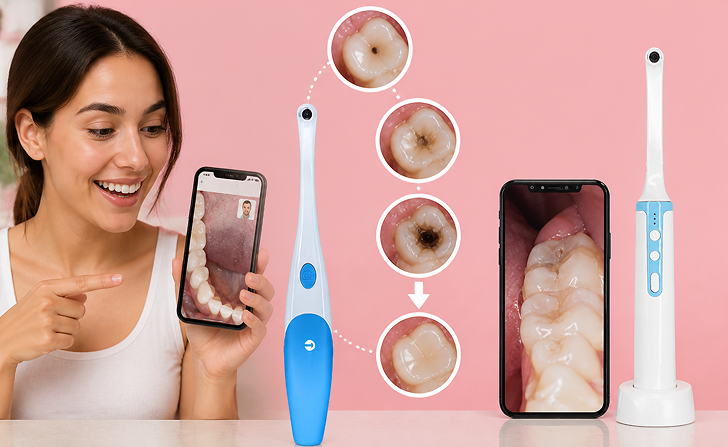
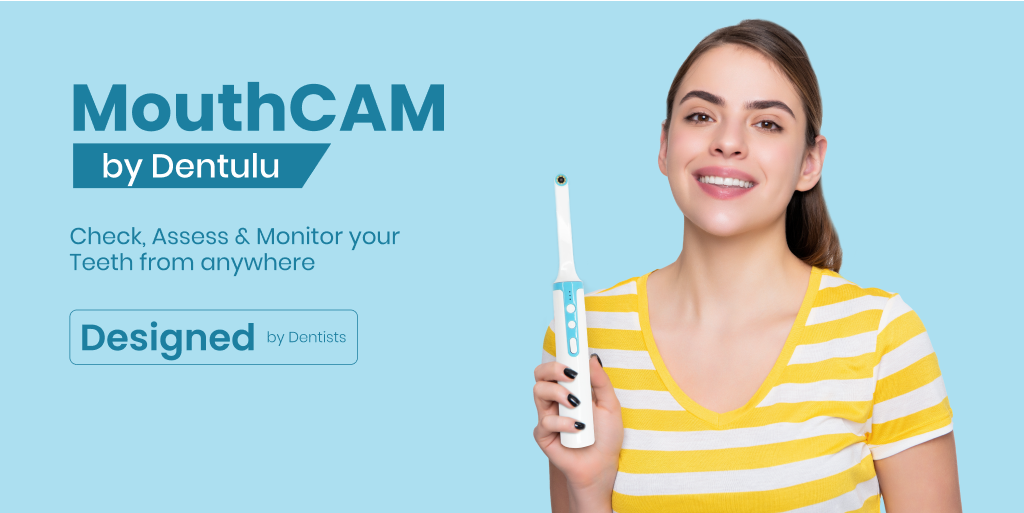
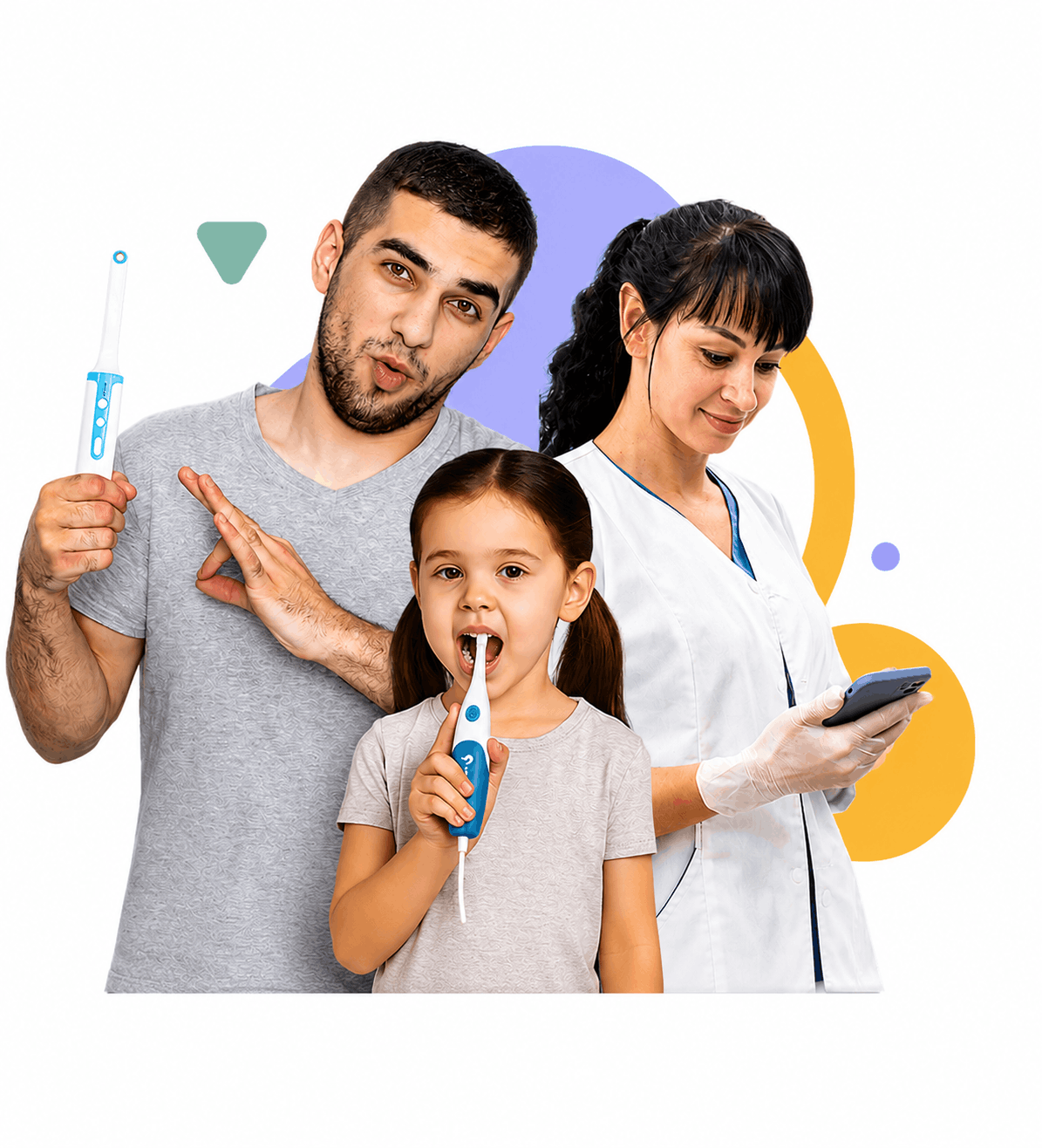
Dentulu’s version of this device, MouthCAM, is built specifically for at home and remote use rather than as a chairside only tool. It’s a compact, pen sized camera that captures HD video with autofocus and is lit by a set of built-in LEDs, so someone using it at home can get a clear, closeup view without needing a dental professional standing over their shoulder. It connects wirelessly and works across phones, computers, and televisions, and it’s rechargeable and IP67 water resistant, which makes it practical for everyday use in a bathroom setting rather than a clinical one. Captured images and videos can be stored and reviewed over time, and for people who want to loop in a provider, they can be shared directly through Dentulu’s HIPAA compliant teledentistry app for a virtual consultation. The device is also designed to work alongside machine learning based monitoring tools that flag areas worth a closer look, though as with any self monitoring tool, that’s meant to support a conversation with a dental professional rather than substitute for one. In practice, it’s an example of how the same core idea behind a chairside intraoral camera showing rather than just describing has been adapted into a device meant to travel home with the patient.
| @Buy it now @ https://store.dentulu.com/products/usb-personal-dental-intraoral-camera |
Why Patients and Providers Tend to Find It Helpful
A few themes come up often when people talk about why intraoral cameras have become a standard part of many practices:
Shared understanding. When patients can see the same image their dentist is looking at, it tends to be easier to follow along with an explanation of what’s going on and why a particular treatment might be recommended.
A record over time. Because images can be saved and compared visit to visit, providers and patients alike have a reference point for tracking changes whether that’s watching a small area to see if it needs intervention, or confirming that a treatment area is healing as expected.
More comfortable conversations. Some patients find dental visits stressful partly because so much is happening that they can’t see or understand. Being shown what’s happening, rather than just being told, can make the whole experience feel less like a mystery.
Documentation. Visual records can also be useful for practice recordkeeping, referrals to specialists, or communicating with insurance providers about a recommended treatment.
None of this means an intraoral camera replaces clinical judgment, x rays, or a thorough hands-on exam. It’s a complementary tool, not a substitute for the rest of a dental evaluation.
A Few Things to Keep in Mind
Like any piece of dental technology, intraoral cameras have practical considerations attached to them. Practices need to invest in the equipment and train staff to use it well, and integrating the images into existing records systems takes some setup. Some patients may need a moment to get used to having a camera in their mouth, even though the process itself is quick and non-invasive. None of these are dealbreakers, but they’re part of why adoption has been gradual rather than instant across the industry.
The Bigger Picture
At its core, the appeal of the intraoral camera isn’t really about the camera itself: it’s about communication. Dental care works best when patients understand what’s happening and why, and when providers have good information to work from. A small camera that lets both sides look at the same screen is a fairly simple idea, but it’s one that’s made a meaningful difference in how dental visits feel and how decisions get made. As more dental care extends into virtual and hybrid settings, that same principle showing rather than just telling is likely to keep shaping how the technology is used, whether in a traditional office or through a connected care platform.
| Explore different types of intra oral camera @ |