Intraoral Cameras: A Clearer way to see and Understand Oral Health
Dental technology continues to change the way dental professionals examine, document, and communicate about oral health. One technology that has become part of modern dental workflows is the intraoral camera.
Small and designed to capture images from inside the mouth, an intraoral camera can provide close-up views of teeth, gums, and other areas of the oral cavity. These images can be viewed, stored, and shared depending on the camera and software being used.
For patients and dental professionals, the value of intraoral imaging is not only about capturing a picture. It is also about making oral health information easier to see and discuss.
What Is an Intraoral Camera?
An intraoral camera is a small camera designed to capture images inside the mouth. Its compact form allows dental professionals to photograph areas that can be difficult to see clearly in a conventional visual examination.
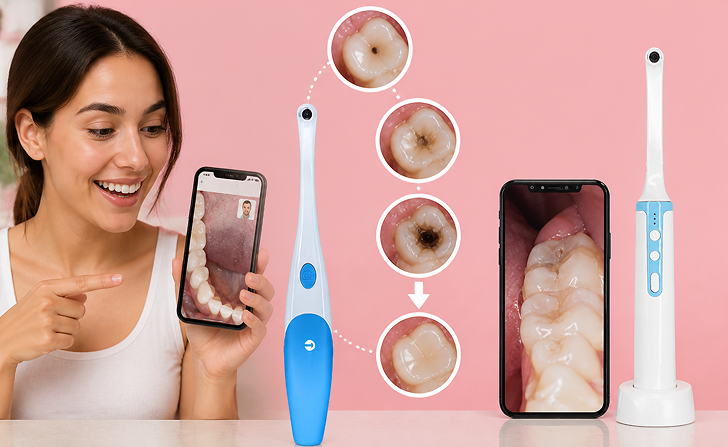
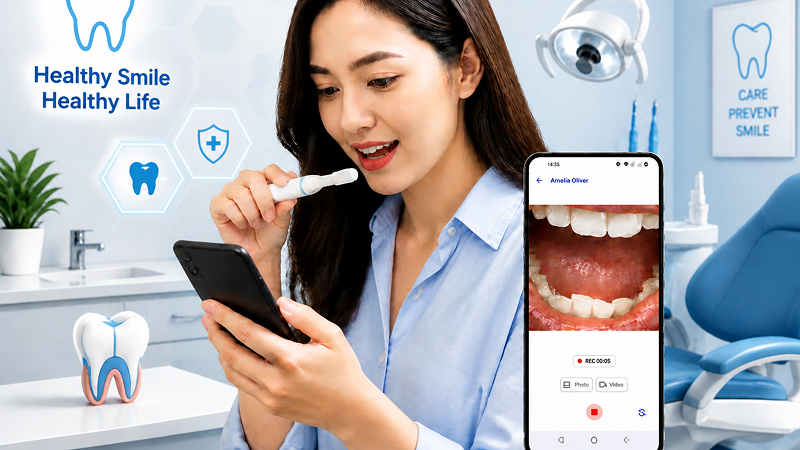
Depending on the device, images may be displayed on a computer, tablet, smartphone, or another compatible screen.
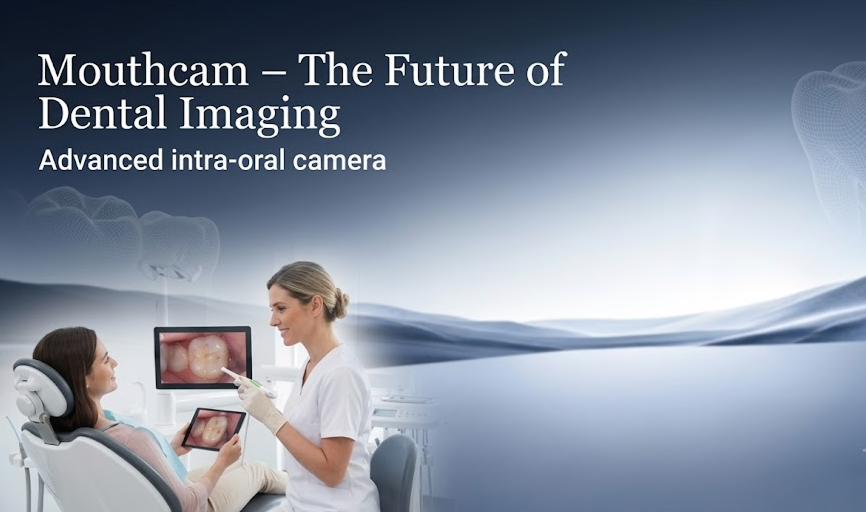
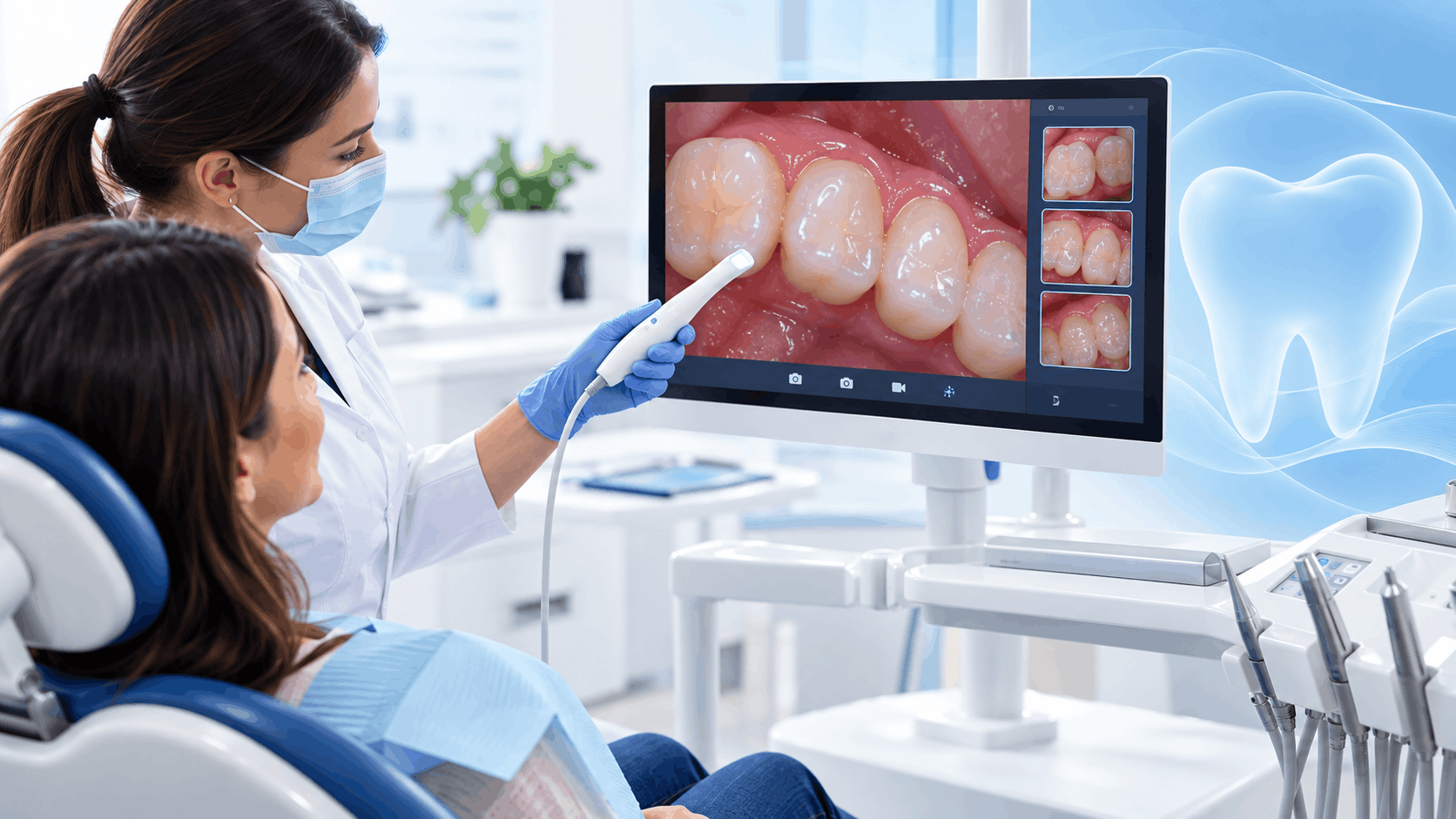
The captured images can provide a visual reference for discussions between dental professionals and patients. The American Dental Association (ADA) also notes that intraoral cameras can be used as visual aids to help patients understand what their dentist sees.
How Does an Intraoral Camera Work?
The basic process is straightforward:
- Position the camera – The camera is guided around the areas of the mouth that need to be viewed.
- Capture images – Photos or, depending on the device, video can be captured.
- View the images – The images can be displayed on a connected screen or device.
- Review and document – Images may be stored and organized for future reference, depending on the system.
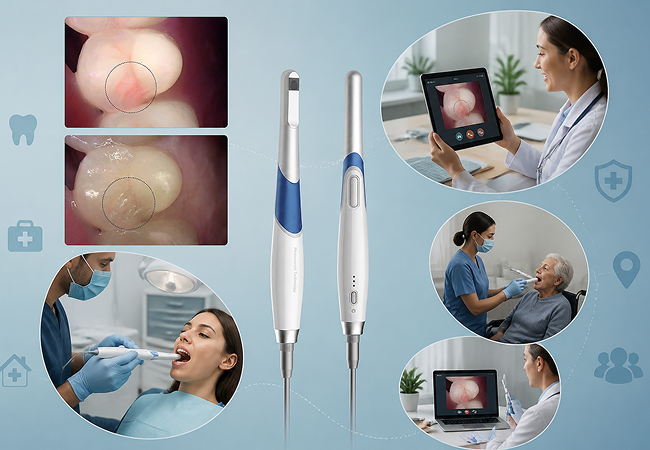
- Share when appropriate – Some systems allow images to be shared with a dental professional for consultation or review.
The exact workflow relies on the camera, software, device, and dental practice.
Why are Intraoral Cameras Used in Dentistry?
- Visual Patient Education
One of the most straightforward uses of an intraoral camera is helping patients see what a dental professional is discussing.
Instead of relying only on verbal explanations, a dentist can show a patient an image of a specific tooth or area of the mouth. This can make conversations about oral hygiene, existing dental work, or areas requiring further evaluation more visual.
The ADA specifically recommends using intraoral cameras as visual aids when explaining oral conditions to patients.
- Documentation
Intraoral images can provide a visual record of the mouth at a particular point in time.
When images are captured consistently, dental professionals may use them as part of their documentation and compare images from different visits when appropriate.
This can be useful when discussing changes in an area of concern or reviewing previous dental work.
- Closer Views of the Oral Cavity
An intraoral camera provides a close-up view of areas inside the mouth.
Rather than asking a patient to look into a simple mirror, the dental professional can display the captured image on a screen. This creates an opportunity for both the provider and patient to look at the same visual information.
- Supporting Dental Consultations
Digital intraoral images can also be useful when information needs to be communicated beyond the dental chair.
Depending on the technology and workflow, captured images may be stored or shared electronically. MouthCAM, for example, provides image capture and sharing functionality through its associated platform.
For virtual dental consultations, having visual information available can provide additional context for the dental professional. However, the images should be considered as part of the overall consultation rather than as a standalone replacement for professional evaluation.
Intraoral Cameras and Patient Communication
Dental terminology can sometimes be difficult for patients to visualize.
A conversation about a particular tooth, restoration, gum area, or oral hygiene concern becomes more tangible when the patient can see the area being discussed.
This is one reason intraoral cameras are often associated with patient education. Dental professionals can use the captured images to explain observations and discuss possible next steps in a more visual format. The ADA has highlighted intraoral cameras specifically for this patient-education role.
Intraoral Cameras vs. Dental X-Rays
An important distinction is that an intraoral camera and a dental X-ray serve different purposes.
An intraoral camera captures photographic images of visible areas inside the mouth. Dental radiographs use X-rays to produce images that can provide information about structures that cannot be seen through a standard visual examination.
The ADA notes that dental X-rays are used when clinically necessary to support diagnosis and treatment, based on the individual patient’s circumstances.
Therefore, an intraoral camera should not be viewed as a universal replacement for other dental diagnostic methods. A dental professional determines which examination or imaging methods are appropriate for an individual patient.
What to Consider When Choosing an Intraoral Camera
When evaluating an intraoral camera, several practical factors may be worth considering:
- Image quality: Can the camera capture clear images of the areas you want to examine?
- Connectivity: Does it work with the devices and software used in your workflow?
- Ease of use: Is capturing and reviewing images straightforward?
- Image storage: How are captured images stored and organized?
- Sharing: Can images be shared appropriately when consultation is needed?
- Workflow: Does the camera fit naturally into your existing examination process?
- Hygiene: What cleaning, disinfection, or disposable-component procedures are required for the specific device?
The right choice can depend on whether the camera is intended for a dental practice, professional examinations, remote consultations, patient education, or personal oral-health monitoring.
MouthCAM: Bringing Intraoral Imaging Closer to the Patient
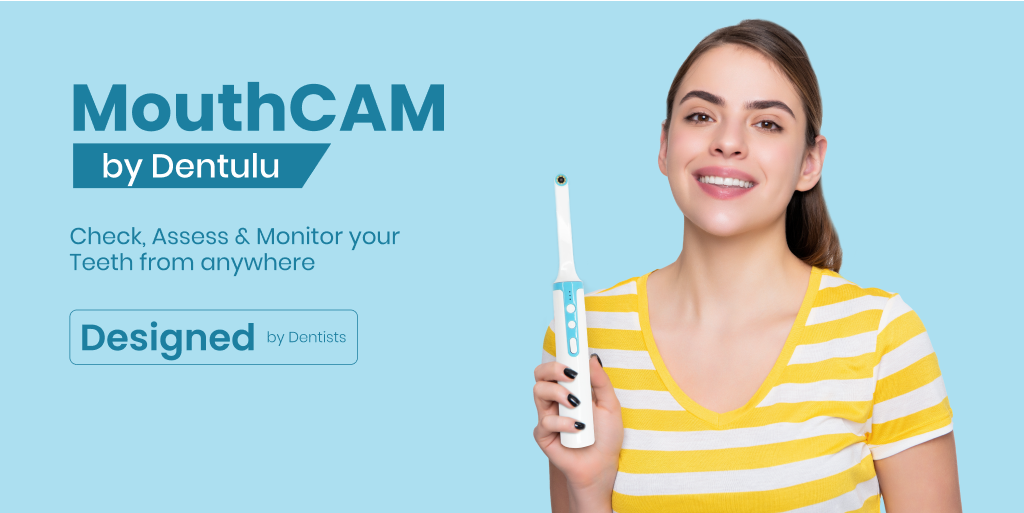
MouthCAM is an intraoral camera platform designed around capturing and sharing images of the mouth.
Depending on the MouthCAM model, the system supports wired or wireless use, image and video capture, and connection with compatible computers or mobile devices. The MouthCAM platform also provides options for viewing, organizing, storing, and sharing captured images.
For patients, this type of technology can provide a way to capture visual information about their teeth and gums that can then be discussed with a dental professional.
For dental professionals, intraoral images can become another visual resource for patient communication, documentation, and remote consultation workflows.
The Future of Dental Imaging Is More Visual
Intraoral cameras are a practical example of how digital technology can make dental information more visual.
They do not replace the knowledge and judgment of a dental professional. Instead, they can provide images that support examination, documentation, communication, and patient education.
As digital dentistry continues to develop, tools such as intraoral cameras can help connect what dental professionals observe with what patients can actually see.
| MouthCAM makes intraoral imaging accessible through a connected camera and digital platform designed for capturing, viewing, and sharing oral images.
Explore MouthCAM @www.mouthcam.com |